
The 1938, Grade II listed mixed use block at 21 John Street Bloomsbury (Camden Council controlled) is a curving, corner architectural statement where we were contracted for:
- Fire door surveys
- Fire compartmentation surveys

You can read more about what each entails on the respective services pages on this website and we will sum up each pithily (hopefully) at the end of this new case study.
21 John Street is a visual feast in a classic red brick and Portland Stone style, redolent of the 1930s. In fact it was built in 1938. “The Duke” pub, also listed forms part of the impressive building too. It spans 8 storeys on from its corner angle, reducing to 3 storeys for the pub and the 9 paned apartment / offices that tie in seamlessly.
Bloomsbury, of course, has long associations with literature, penning the term “the Bloomsbury set”, perhaps the modern equivalent of the slightly pejorative term “the liberal metropolitan elite”.

The Bloomsbury Set (sometimes called the Bloomsbury Group) was an influential circle of writers, intellectuals, artists, and thinkers in early 20th-century Britain, centred around the Bloomsbury area of London.
They were active roughly from the 1900s through the 1930s and became known not only for their creative output but also for their unconventional views on art, literature, politics, and personal relationships.
Key Members:
-
Virginia Woolf – novelist and essayist, author of Mrs Dalloway and To the Lighthouse
-
Leonard Woolf – political theorist, publisher, and husband of Virginia
-
E. M. Forster – novelist, author of A Passage to India
-
Lytton Strachey – biographer and essayist, known for Eminent Victorians
-
John Maynard Keynes – economist, whose ideas shaped modern macroeconomics
-
Vanessa Bell – painter, sister of Virginia Woolf
-
Duncan Grant – painter and designer
-
Roger Fry – art critic and painter
With co-working space being a post-Covid phenomenon, we don’t expect any of these to have perched at or near 21 John Street, with notepads, pens and typewriters, but the area’s associations are fascinating. London was very much (and still is) like that. Bruton Street, in Mayfair, has associations with fashion, with Lacoste and Sir Norman Hartnell, linked with a building we worked on there, with passive fire protection.

Another street Stuart spotted close to Mayfair was awash with blue plaques, celebrating literary heritage.
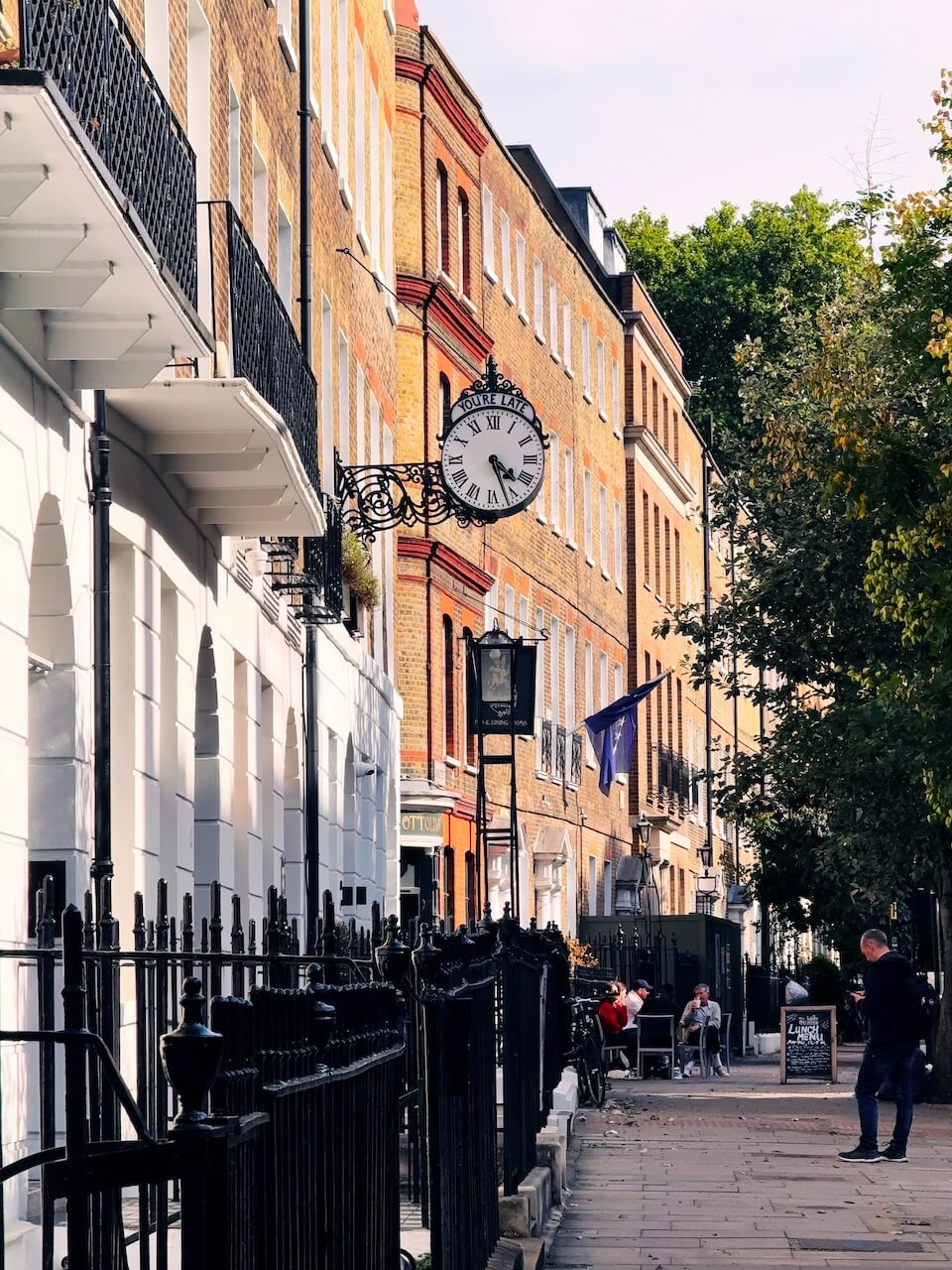
He also was charmed by a clock on with a witty inscription declaring “YOU’RE LATE.”
Ensuring the safety of buildings like those on 21 John Street requires careful attention to fire compartmentation
Fire compartmentation surveys play a crucial role in assessing how well a building is divided into sections designed to contain fire and smoke, slowing their spread and allowing occupants time to evacuate safely. These surveys involve a thorough inspection of walls, floors, ceilings, doors, and other barriers, checking for gaps, breaches, or degraded materials that could compromise fire resistance.
Specialist surveyors document findings, often using detailed diagrams and photographic evidence, and provide recommendations for remedial work to bring the property in line with regulatory standards. For historic or multi-use buildings, such as those in Camden, it’s particularly important to balance safety requirements with preserving architectural features.
Regular fire compartmentation surveys are not only a legal obligation under building and fire safety regulations, but they are also essential for protecting life, property, and insurance compliance.
By prioritising these surveys, property owners at 21 John Street can ensure that their building remains a safe and compliant space, while also preserving its unique character within Camden’s vibrant urban landscape.

Fire Door Surveys
Fire doors are a critical part of any passive fire protection strategy, and fire door surveys ensure they function correctly in an emergency.
Our surveyors check door frames, seals, hinges, and closing mechanisms to identify any defects or wear that could reduce their effectiveness. Properly maintained fire doors help prevent the spread of fire and smoke, giving occupants more time to evacuate safely. Regular surveys and timely maintenance of fire doors are vital for regulatory compliance, building safety, and overall peace of mind for property owners.
If you’d like to work with a professional and expert team of passive fire protection specialists, contact the team today: info@blockcompliance.net
Alternatively, contact us via our active LinkedIn company page and growing Instagram channels, where we showcase photos and videos of our sterling work, most days.


