
A landmark in Waterloo’s evolving landscape
Rising above the coastal edge of Waterloo in north Liverpool, Dean House is a 14-storey residential tower that reflects both the city’s architectural past and its ongoing commitment to safer living. It’s where Block Compliance Ltd are carrying out fire compartmentation surveys.
Situated close to the waterfront, the Marine Lake and within reach of Crosby and Seaforth, the area blends established communities with regeneration, making building safety an increasingly important priority.
Waterloo itself has a distinct character. It sits just outside the city centre, where quieter residential streets meet open coastal walks and views across the Mersey. It is an area where traditional housing stock meets mid-century and high-rise developments, many of which now fall under tighter scrutiny following changes brought in by the Building Safety Act. In this context, buildings like Dean House are not just places to live, but assets that must be actively managed, assessed and maintained to modern safety standards.
Why Waterloo is called Waterloo
The name Waterloo carries historical weight that stretches far beyond Liverpool. The area takes its name from the decisive Battle of Waterloo, fought in 1815, where British and allied forces led by Duke of Wellington defeated Napoleon Bonaparte.
Like many places across Britain, Waterloo in Liverpool was named in the years following the battle, reflecting a period of national pride and commemoration. As the area developed during the 19th century, the name became embedded in its identity, linking a quiet coastal suburb of Merseyside to one of the most significant moments in European history.
Today, that connection remains part of the area’s character. While Waterloo is now known more for its coastline, community and proximity to Liverpool, its name is a reminder of a defining historical event that shaped the modern world.
Fire safety improvements in high-rise living
Dean House, like many towers of its era, has undergone significant improvements in recent years. Fire safety measures, including sprinkler systems, have been introduced or upgraded as part of wider refurbishment works aimed at improving both compliance and resident confidence from Ocasa Homes, who we are delighted to be working with.
In buildings exceeding 18 metres in height, like Dean House (and Willow House, Seaforth) such interventions are not just recommended but expected, forming part of a layered approach to fire protection. However, active systems such as sprinklers are only one part of the picture. Passive fire protection remains the backbone of any building’s fire strategy, and this is where fire compartmentation surveys play a critical role.

What fire compartmentation means in practice
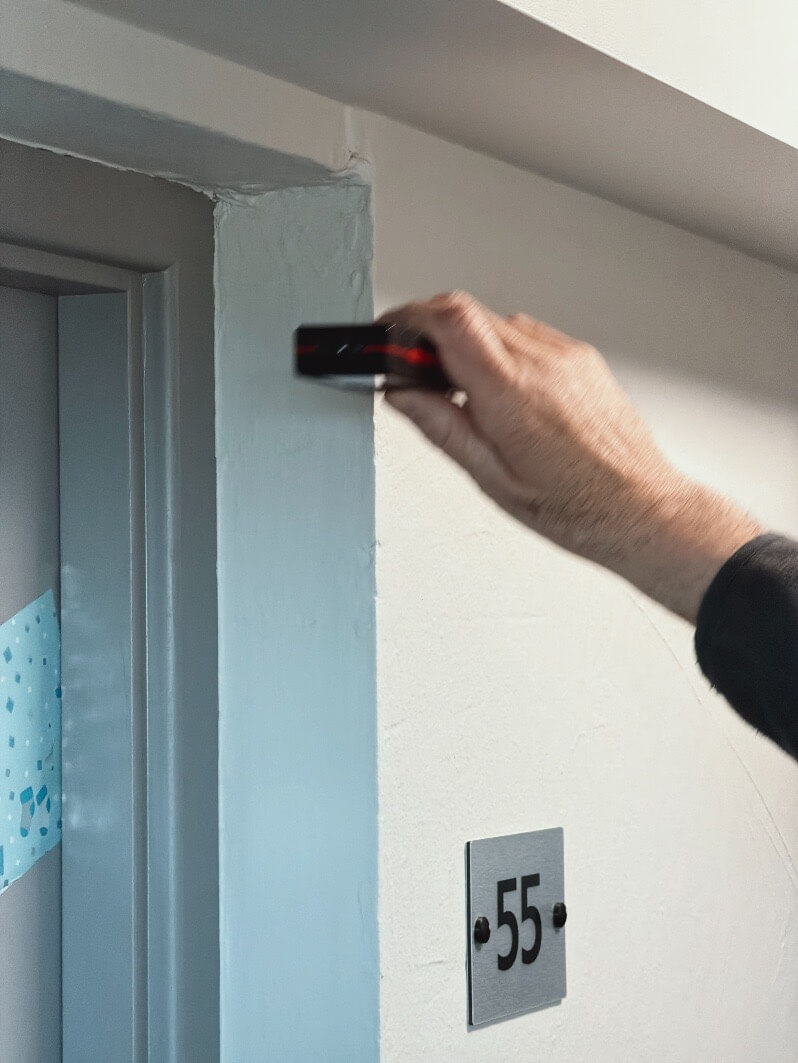
At Dean House, Block Compliance Ltd has been engaged to carry out detailed fire compartmentation surveys across the building. These surveys focus on how the structure itself resists the spread of fire and smoke.
In simple terms, compartmentation is about dividing a building into fire-resistant sections, ensuring that if a fire does occur, it is contained long enough for occupants to escape and for emergency services to respond effectively.
Within a 14-storey tower, this becomes even more important. Vertical and horizontal compartments must work together seamlessly. Walls, floors, service risers, ceiling voids and penetrations all need to perform as intended. Even minor breaches, such as poorly sealed pipework or damaged fire-stopping materials, can undermine the entire system.

A detailed and methodical survey approach
Block Compliance’s approach is methodical and intrusive where necessary. Surveyors inspect compartment lines, identify defects, and record findings with precision. This may include opening up sections of walls or ceilings to verify what sits behind the surface in intrusive surveys.
The aim is not just to identify visible issues, but to understand the integrity of the building as a whole. This level of detail ensures that any remedial works are based on evidence, not assumption.
Supporting compliance under current legislation
This work feeds directly into wider compliance requirements. Fire compartmentation surveys support fire risk assessments, inform building safety case reports, and help duty holders demonstrate compliance under current legislation.
As regulatory expectations continue to evolve, particularly for higher-risk residential buildings, having a clear and evidence-based understanding of compartmentation is essential.
Delivering reassurance for residents and stakeholders
In a building like Dean House, the benefits are tangible. Effective compartmentation slows fire spread, reduces damage, and most importantly, protects lives. It also provides reassurance to residents, many of whom are increasingly aware of building safety following high-profile incidents across the UK, such as the tragedy at Grenfell.
Waterloo’s mix of older and modern buildings means that no two projects are the same. Each survey requires a tailored approach, taking into account construction methods, historical alterations and current usage.

This is where experience matters, and where Block Compliance Ltd continues to support property managers, landlords and developers across Liverpool and beyond.
Dean House stands as a clear example of how proactive fire safety measures can transform a building. Through detailed surveys, informed recommendations and ongoing compliance support, it is possible to bring older high-rise stock in line with today’s expectations.
For residents, it means peace of mind.
For those responsible for the building, it means clarity, compliance and confidence in the systems that are there to protect.


