
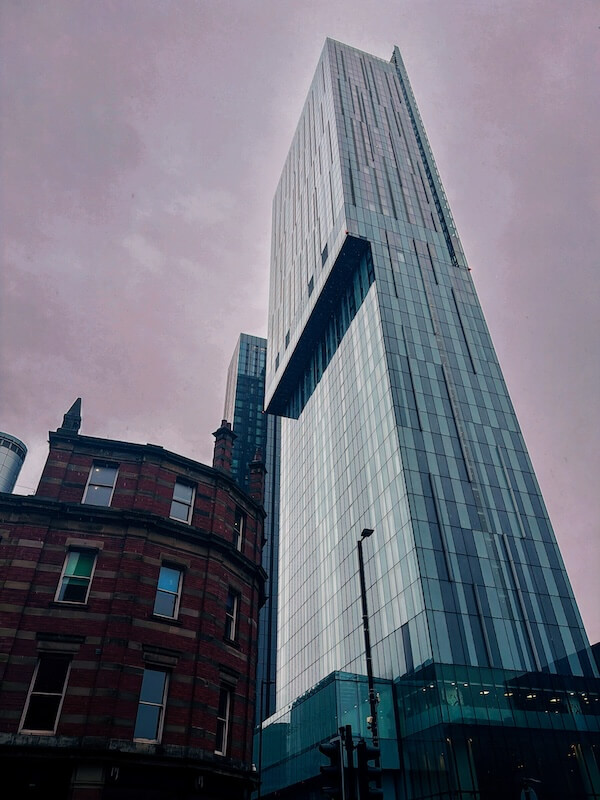
Manchester’s skyline changed forever with the arrival of Beetham Tower
Rising above Deansgate, the tower is both a physical landmark and a symbol of the city’s post industrial confidence, combining residential apartments, a hotel, and public space within one of the UK’s most recognisable high rise buildings.
While its height and silhouette are widely admired, the tower’s history and ongoing performance tell a deeper story about complex buildings, long term occupation, and the critical importance of passive fire protection.
A bold vision and a personal connection
Designed by Ian Simpson, Beetham Tower was conceived as a statement of modern Manchester. At the time of its completion in 2006, it was the tallest building outside London and marked a clear shift towards high rise city centre living.
The building is closely associated with its architect. Ian Simpson famously occupies a duplex penthouse at the top of the tower, reinforcing the idea that this was not just a speculative development, but a building its designer believed in enough to call home. That level of confidence brings with it an expectation of quality, longevity, and performance across every aspect of the structure.
Hotel use and changing ownership
The lower levels of Beetham Tower were originally occupied by the Hilton Manchester Deansgate, bringing international hotel use into the heart of the building. Over time, the hotel element changed hands, with operations transferring away from Hilton as the building evolved and ownership structures shifted.
Mixed use towers like this present unique fire safety considerations. Residential apartments, hotel accommodation, shared cores, and back of house areas must all be carefully separated to ensure that fire and smoke are contained within defined compartments. As occupancy and management arrangements change, those passive fire protection measures become even more critical to reassess and verify.
The whistling roof and the toast rack
One of Beetham Tower’s most talked about features is not visible at ground level, but audible on windy days. The external blade at the roof, often nicknamed the toast rack, became infamous for producing a loud whistling sound during high winds shortly after completion.
While the issue was eventually addressed through engineering modifications, it serves as a reminder that tall buildings behave differently. Wind, movement, pressure, and complex interfaces all place additional demands on design and construction. These same factors make robust passive fire protection essential, particularly where movement joints, service penetrations, and structural interfaces intersect.

Passive fire protection in tall mixed use buildings
In a high rise building like Beetham Tower, passive fire protection is fundamental to life safety. Fire resisting walls and floors, protected shafts, compartmentation between uses, cavity barriers, fire stopping, and fire doors all work together to limit the spread of fire and smoke.
Unlike active systems, passive measures are always in place. Their effectiveness depends on correct installation and ongoing integrity. Over time, buildings undergo change. Services are upgraded, layouts are altered, and repairs are carried out. Each intervention has the potential to compromise compartmentation if not properly controlled.
This is why intrusive surveys, detailed inspections, and evidence based assessments are essential in landmark towers that remain fully occupied.
Block Compliance Ltd and complex high rise assets
Block Compliance Ltd work across high rise and mixed use buildings, supporting dutyholders with passive fire protection surveys, compartmentation assessments, fire stopping inspections, and fire door programmes.
In buildings of this scale and prominence, understanding what is behind the finishes is just as important as what can be seen. Clear documentation, proportionate remediation, and a long term view of building safety are key to protecting residents, operators, and the asset itself.
A Manchester icon built to endure
Beetham Tower is more than a skyline feature. It represents a moment in Manchester’s architectural history, a personal commitment from its architect, and an early example of modern high rise living in the city.
Its continued success relies not only on design and reputation, but on the quiet performance of systems that rarely attract attention until they are needed most. Passive fire protection is one of those systems, ensuring that iconic buildings like Beetham Tower remain safe, resilient, and fit for purpose well into the future.


